
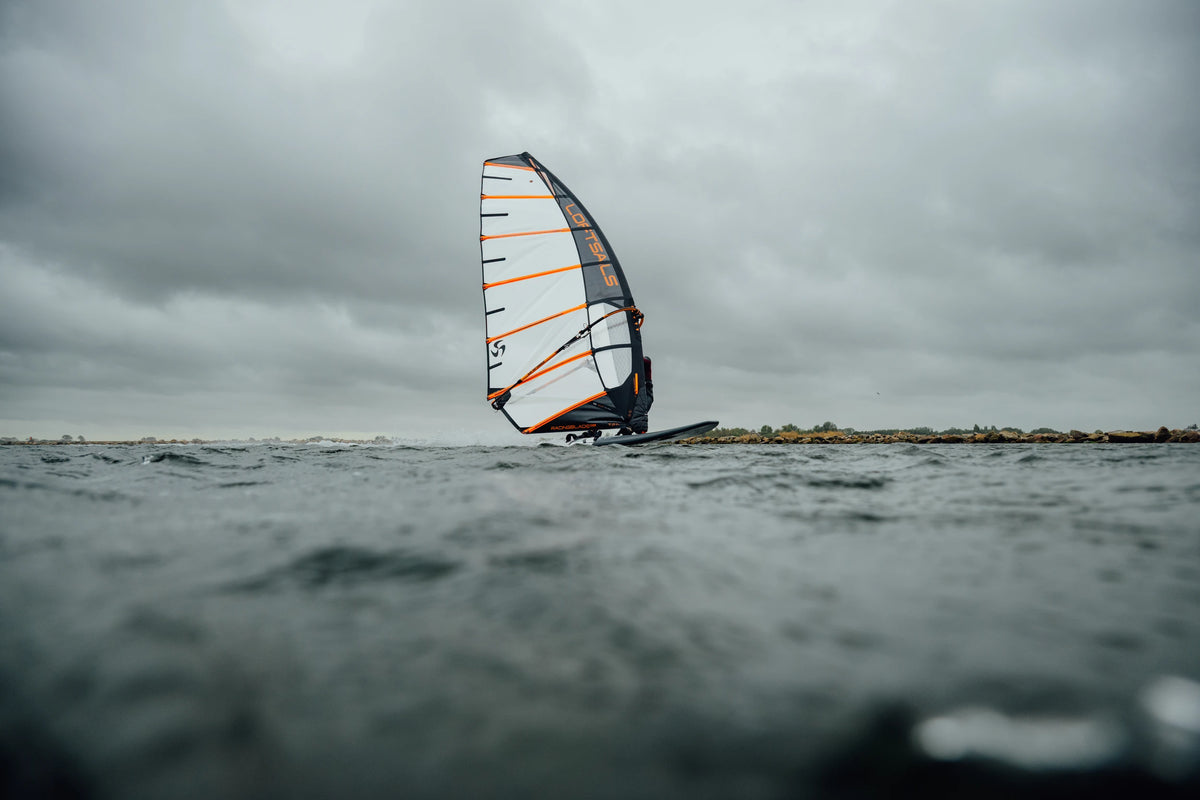
Fin Slalom Racing
Pure Racing


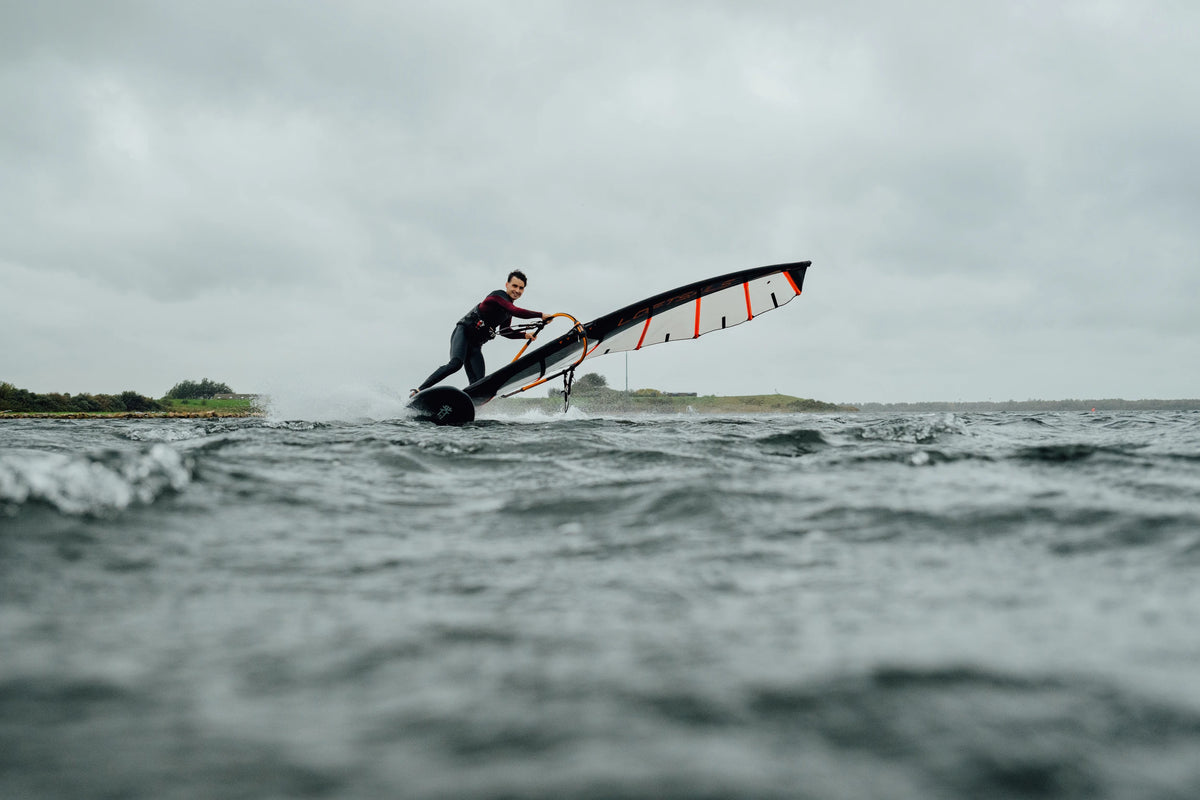
Performance Profile
Technical Specifications
Program Profile
-
Entry 0/10
-
Wave 0/10
-
Freeride 6/10
-
Freestyle 0/10
-
Race 10/10
-
Foil 7/10
Performance Metrics
* Trim and conditions dependent
Construction Materials
See in Action
Get the Highlights


Sails Specifications
| Size (m²) | Luff (cm) | Boom (cm) | Head | Extension (cm) | Battens | Cambers | Weight (kg) | Rec. Mast |
|---|---|---|---|---|---|---|---|---|
| 5.2 | 418 | 170/172 | Fixed | 18 | 7 | 3 | 4.95 | Team Edition RDM 400 |
| 5.7 | 430 | 180/182 | Fixed | 30 | 7 | 3 | 5.15 | Team Edition RDM 400 |
| 6.3 | 450 | 192/194 | Fixed | 20 | 7 | 3 | 5.4 | Team Edition SDM 430 |
| 7 | 474 | 200/202 | Fixed | 14 | 7 | 3 | 5.65 | Team Edition SDM 460 |
| 7.7 | 498 | 208/210 | Fixed | 38 | 7 | 3 | 5.85 | Team Edition SDM 460 |
| 8.4 | 522 | 218/220 | Fixed | 32 | 7 | 3 | 6.2 | Team Edition SDM 490 |
| 9 | 542 | 222/226 | Fixed | 22 | 7 | 3 | 6.35 | Team Edition SDM 520 |
Could not load this selection. Please try again.
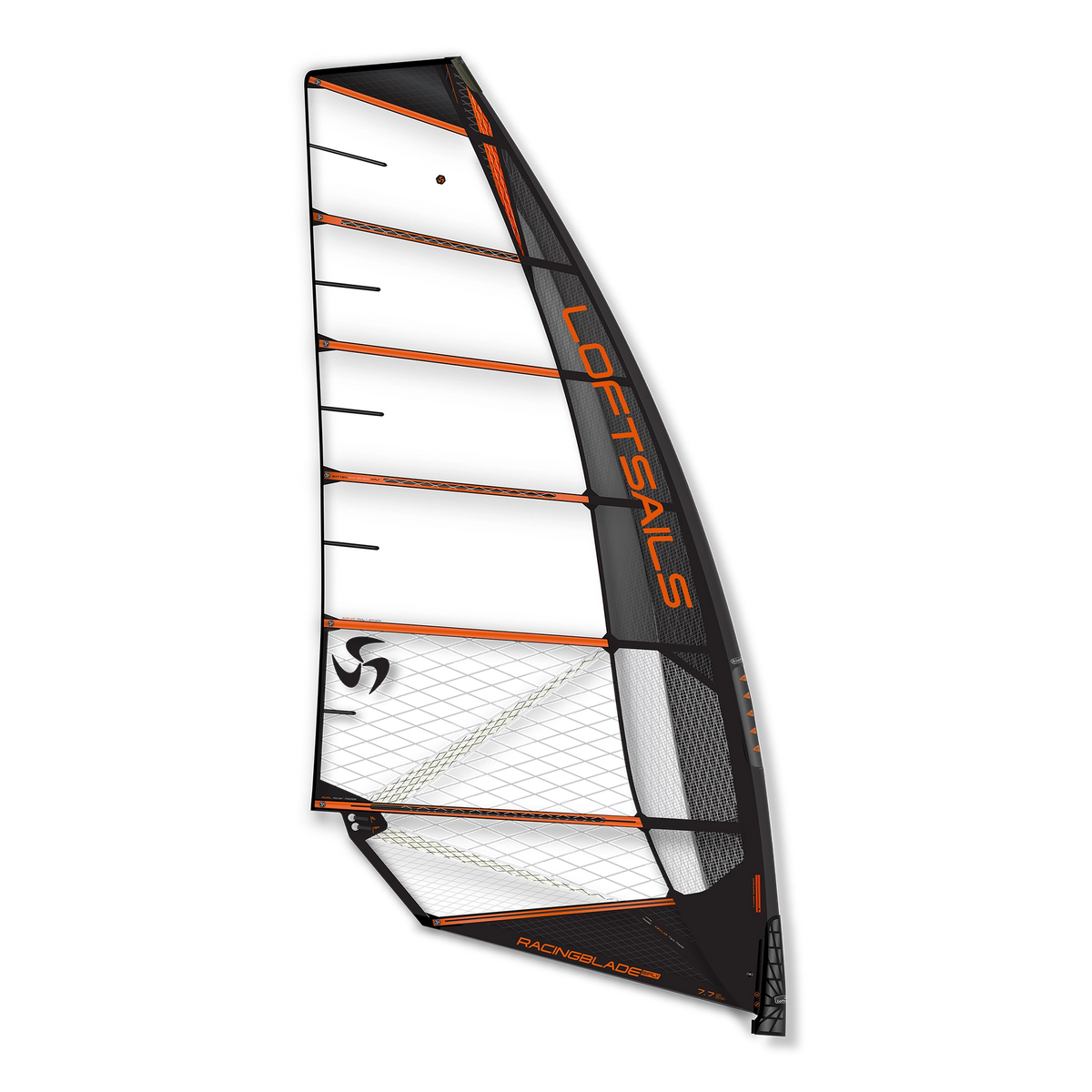
Racingblade 8.4 White 2027
Description
A PWA Fin Slalom Sail.
The Racingblade sits at the heart of the Loftsails racing program — a dedicated fin slalom sail engineered for the conditions where races are actually decided. It meets all PWA rules and regulations and is designed to perform when pressure stays high, trim is exact, and margins are small.
Efficiency Shaped for Fin Slalom
A higher aspect ratio and refined profile geometry reduce drag and lock in a clean, efficient working shape that holds across the full racing wind range. Out of the start, the sail builds speed quickly and settles into an efficient, low-drag profile that rewards committed sailing.
A slightly deeper profile below the boom increases stability and power control, delivering a sail that feels more alive in the hands — smoother power, quicker acceleration onto the plane, and an easier feel at the upper end.
Balance Tuned for Racing Pressure
Revised luff curves and subtle batten angle re-orientation lower the center of effort and improve stability when sailed powered. Load distributes more evenly through the mid-section of the rig, reducing vertical pull and keeping the sail stable and committed when fully powered.
The leech exhaust is carefully calibrated — slightly reduced lower leech release and slightly more open upper leech release — maintaining efficiency across the full wind range. Slightly deeper clew cut-outs promote more harmonic lower leech twist, keeping the sail composed from the lightest workable condition through to fully powered racing.
Batten Geometry Optimized for Speed
Carefully tuned battens combine longer rod sections with rear-shifted tube segments, creating a shallower entry profile. Revised batten specifications sharpen the entry angle and induce a slightly rounder mid-body profile, augmenting low and mid wind range power. Side-alternating X-Ply batten pockets minimize asymmetry, keeping the profile consistent and symmetric under racing loads, heat after heat.
TekCam 3: Precision and Consistency
Racingblade runs the TekCam 3 camber system — lightweight cams that support higher batten angles and refined shaping while delivering fast, predictable rotation even under the high tensions typical of fin slalom racing.
A Mast Pocket Designed to Hold Its Shape
The mast panel and mast pocket extend under the tack roller, equalizing downhaul tension across three layers for rotation ease and long-term longevity. A double-layer, stretch-resistant zone combines 2 mil quad-axial X-Ply with IYU250 woven material, running from head to tack. A 50 mm triple-sewn mast sleeve seam adds wear resistance through years of racing use.
Load Distribution and Structural Control
Dual Kevlar clew radials reinforce the critical load-transfer zone, distributing load evenly into the sail body to maintain consistent drive and prevent local deformation when racing fully powered. X-Ply laminates reinforce the window, leech, and foot. 4.0 mil bi-ply body panels provide UV resistance and shape stability. 5.0 mil foot panels increase durability in high-wear zones.
A Broader, More Targeted Range
The Racingblade range offers a more logical size progression across different boards, sailor weights, and racing conditions. The 6.3 m² bridges the gap above the 5.7 m², well-suited to long-distance racing on 90–100 litre boards. The 7.0 m² suits heavier sailors on 115–120 litre boards in unstable or offshore conditions. The 7.7 m² increases low-end power across a wide range of board sizes. The 9.1 m² returns for maximum performance and early planing in light winds — outstanding for fin racers who want an alternative to foiling.
Racingblade, Defined
For sailors who race, tune precisely, and expect the same performance from the first start to the last reach. When speed, control, and consistency decide the result, Racingblade holds its end.
Frequently asked questions
The size range has been restructured with a more logical progression. The former 6.6 m² is replaced by 6.3 m² and 7.0 m², providing more targeted options across boards, sailor weights, and conditions. The 7.7 m² replaces the 7.4 m² with increased low-end power, and the 9.1 m² returns for light wind fin racing.
Across the range, the profile is slightly deeper below the boom, delivering more low and mid wind range power and a smoother, more progressive feel. Revised batten specifications sharpen the entry angle and induce a slightly rounder mid-body shape. The leech exhaust has been recalibrated — slightly reduced lower leech release and slightly more open upper leech release — improving efficiency across the wind range. Slightly deeper clew cut-outs promote more harmonic lower leech twist.
The sum of these refinements results in improved low-end power, better upwind performance, and easier upper-end handling.
The Racingblade is designed for competitive fin slalom racing, where sailing powered for extended periods is the norm and efficiency under sustained load is critical.
It performs best in medium to strong wind conditions on slalom racecourses, where acceleration out of the start, speed through chop, and consistency over long powered reaches decide results. The sail is tuned to hold its shape and balance when pressure stays high, rather than adapting to casual or variable sailing styles.
Racingblade is not intended for relaxed freeride use. It is built for race environments where trim is precise, loads are sustained, and performance must remain consistent throughout an entire heat.
The Racingblade is intended for experienced and competitive sailors who regularly race or train at a high level.
It suits riders who are comfortable sailing fully powered, tuning downhaul and outhaul precisely, and adjusting their setup to match wind strength, board choice, and fin selection. The sail rewards accurate rigging, committed stance, and an understanding of how small trim changes affect speed and control.
Sailors looking for a more forgiving or versatile sail for everyday sessions will generally be better served by Switchblade or Oxygen.
Both sails share race-derived design principles, but they are built for different levels of specificity.
Racingblade is a dedicated fin slalom race sail developed for maximum aerodynamic efficiency under sustained racing pressure. It is more sensitive to trim, more specialized in its wind range, and optimized for holding speed and control across an entire racecourse.
Switchblade delivers much of that race-inspired stability and drive, but in a freerace format that is more tolerant and easier to manage outside a race environment. It rigs more easily, offers a broader usable range, and suits sailors who want high-speed performance without full race specialization.
In short, Racingblade is built for competition, while Switchblade is built for high-performance freerace sailing.
The Racingblade is designed for fin slalom boards in single-fin configurations, where its locked-in profile and stable center of effort can be fully exploited across a racecourse.
Board and size pairing matters. The 6.3 m² is well-suited to boards in the 90–100 litre range and performs particularly well in long-distance racing. The 7.0 m² pairs naturally with 115–120 litre boards, where it excels in unstable or offshore wind conditions that demand consistent drive. The 7.7 m² covers a wider range — from 115–120 litre boards up to 135 litre boards with widths above 80 cm — making it a versatile choice across varied racing conditions. The 9.1 m² is the natural companion for large-volume boards in light wind racing, delivering outstanding early planing and efficiency for fin racers who prefer not to foil.
For freerace or freeride boards, Switchblade or Oxygen are more appropriate choices, tuned for broader use and less specialized sailing.
